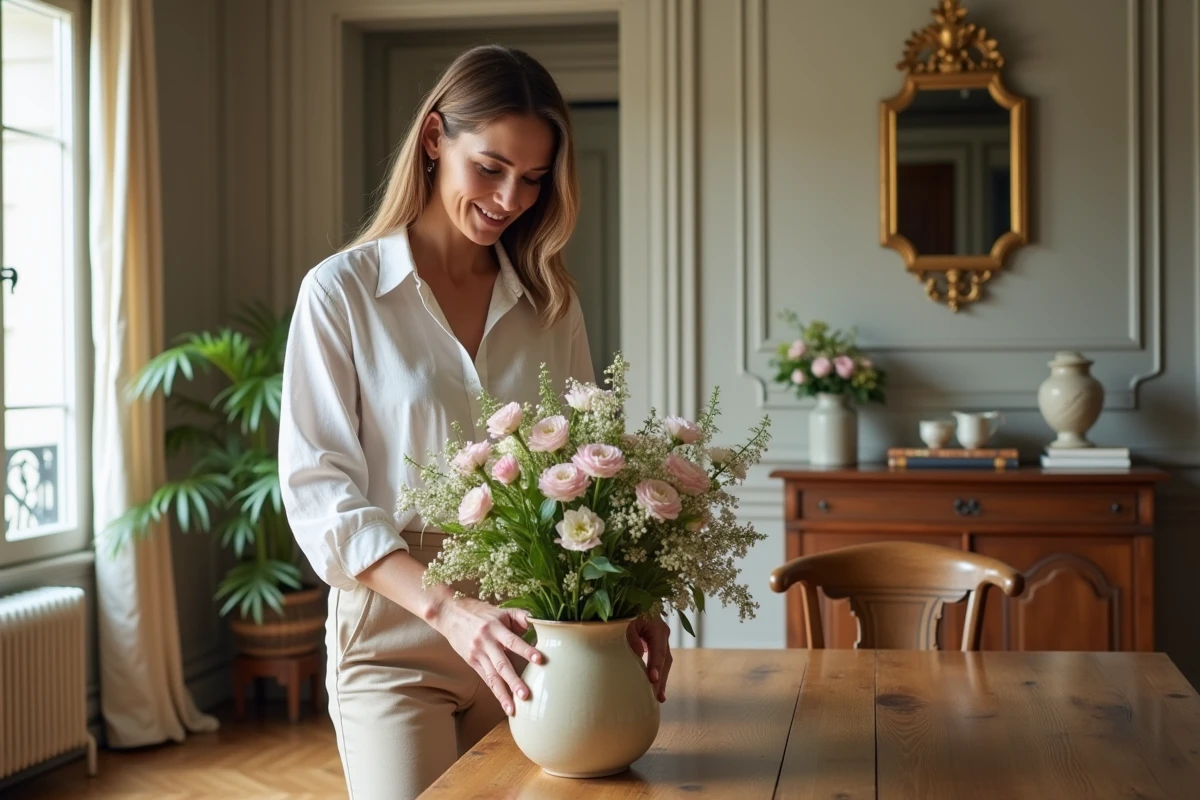
Strict symmetry, often perceived as the norm in interior design, regularly gives way to asymmetrical compositions in the most sought-after interiors. The codes of French chic do not rely on a fixed model but evolve with influences, eras, and individual boldness.
Some materials, once reserved for practical uses, are now valued as key elements of domestic refinement. The boundary between heritage and innovation proves to be more porous than it appears, giving rise to unexpected and singular spaces.
Why does the French house style continue to captivate?
The French style is neither a whim nor nostalgia. It asserts itself through its ability to reconcile elegance and comfort, marrying the classic and the contemporary. Heir to the French palaces of the 17th and 18th centuries, the splendor of Louis XV and Louis XVI, it shines in both Parisian apartments and the tranquility of a Provençal farmhouse or the majesty of a château in the Loire.
The French decor does not freeze into a static setting. It draws freely from rococo and neoclassical styles, from the refinement of Provence as well as the bold modernity of major metropolises. Through its architectural details, moldings, woodwork, flooring, and fireplaces, it asserts a way of life where discreet luxury and authenticity take precedence.
Far more than a question of aesthetics, the French house style is defined by the choice of materials: patinated wood, linen, stone, ceramics. The hues range between muted tones and pastels, creating an atmosphere that is both warm and refined. The furniture, often marked by time, reveals a France attentive to details and authentic patina.
This balance, far from being a mere trend, attracts with its ability to blend heritage and creativity. Increasingly, enthusiasts are rediscovering, through platforms like French Home, the art of shaping, piece by piece, an atmosphere where charm combines with singularity. Seeking coherence, caring for every gesture, asserting a precise line: this is where the strength of the French style lies, oscillating between tradition and ever-renewed decor inspirations.
The major decor trends that reinvent the French spirit
In French interior decoration, influences multiply but the foundation remains: refinement, natural materials, elegant lines. On this base, current trends sketch a rich landscape, where each style asserts its own identity.
Here are the main directions shaping the French house style today:
- The French country style combines timeless elegance and rustic charm. Patinated wood, stone, linen, or wrought iron structure the space; soft colors and floral patterns like stripes or toile de Jouy add a delicate touch. Weathered furniture and artisanal ceramics testify to a lively home, constantly evolving.
- The French cottage style, stemming from the cottagecore movement, emphasizes simplicity and nature. It features raw materials: aged wood, wool, rattan, terracotta, accompanied by bouquets of dried flowers or vintage accessories. The soft curves of the furniture and aged finishes create a comforting authenticity.
- Scandinavian influences make an appearance without imposing themselves. Pastel tones, clean design, and natural materials (light wood, cotton, wool) enhance light and functionality. This dialogue between North and South enriches the style without diluting it.
- The industrial style captivates with its mixes of metal, wood, and exposed bricks. It revisits the spirit of Parisian workshops, combining recycled objects and minimalist aesthetics to bring rhythm to spaces.
The modern French house no longer hesitates to coexist with these influences. Between decor trends and heritage, it claims a personal style, where each material, each color, each piece of furniture sketches a resolutely contemporary vision of hexagonal charm.
Inspiration piece by piece: tips and ideas to personalize your interior
Living Room: the alliance of comfort and refinement
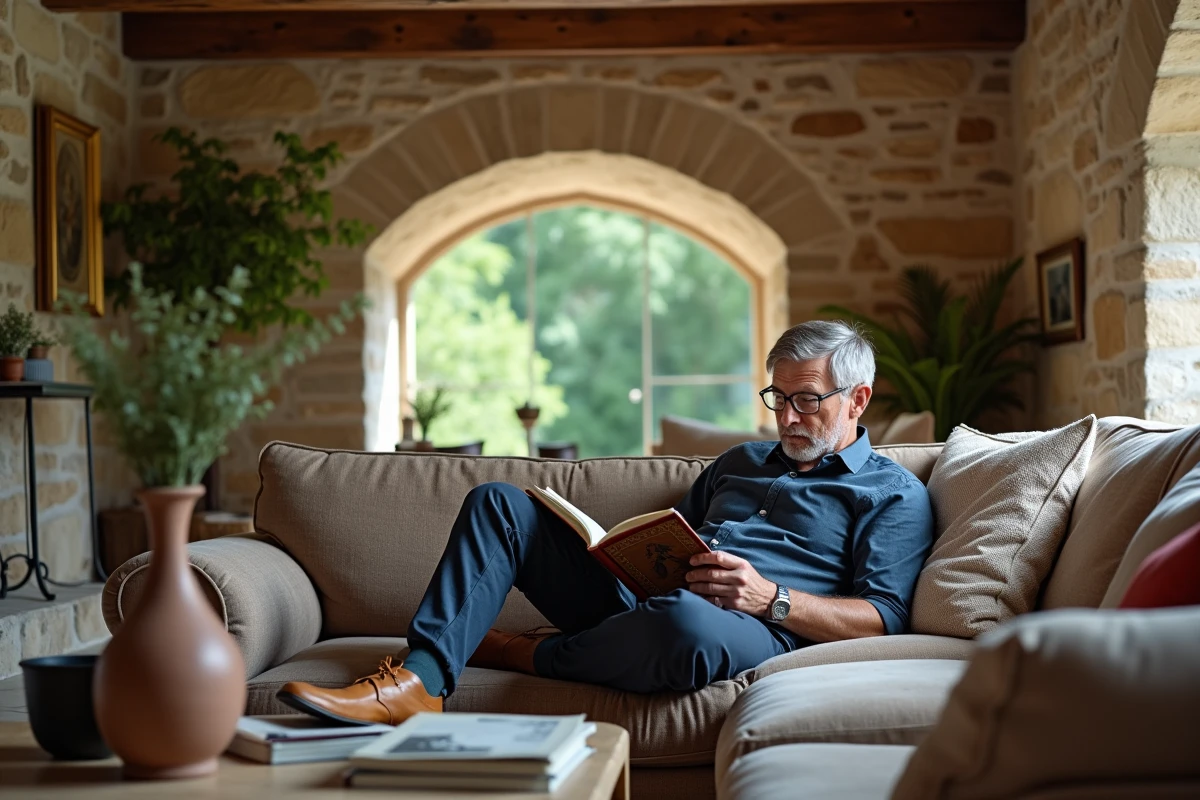
In the living room, the French spirit is expressed through the subtle balance between generous sofa, crafted coffee table, and period armchairs. An antique mirror, gilded or patinated, captures light and enlarges the space. Plush rugs and embroidered cushions enhance the welcoming atmosphere, while a few works of art or framed prints highlight the character of the place. For example: in a Haussmannian apartment, a large mirror reigns above the fireplace, surrounded by antique candlesticks and bound books, creating a decor that is both elegant and lively.
Bedroom: softness and elegance
The bedroom favors pastel shades: off-white, sage green, sky blue. The canopy bed, dressed in linen or silk, asserts its presence. Antique wardrobes and refined bedside tables, found at a flea market, display floral patterns or rounded lines. Investing in cozy bedding and light curtains envelops the room in a soft warmth.
Kitchen and Dining Room: authenticity and conviviality
In the kitchen, patinated wooden furniture coexists with open shelves displaying earthenware and terracotta pottery. The chosen utensils and the retro pot rack evoke family traditions. For the dining room, a sturdy farm table is surrounded by straw chairs and an antique sideboard. Adding a patterned tablecloth, a few fresh or dried flowers, and wicker baskets reinforces the warm atmosphere, true to the spirit of French decoration.
Adopting the French house style is choosing a subtle balance: one that connects memory to boldness, the useful to the beautiful, the everyday to the exceptional. It remains for each person to write their decor, unique and alive, so that each room tells, in its own way, a contemporary French story.