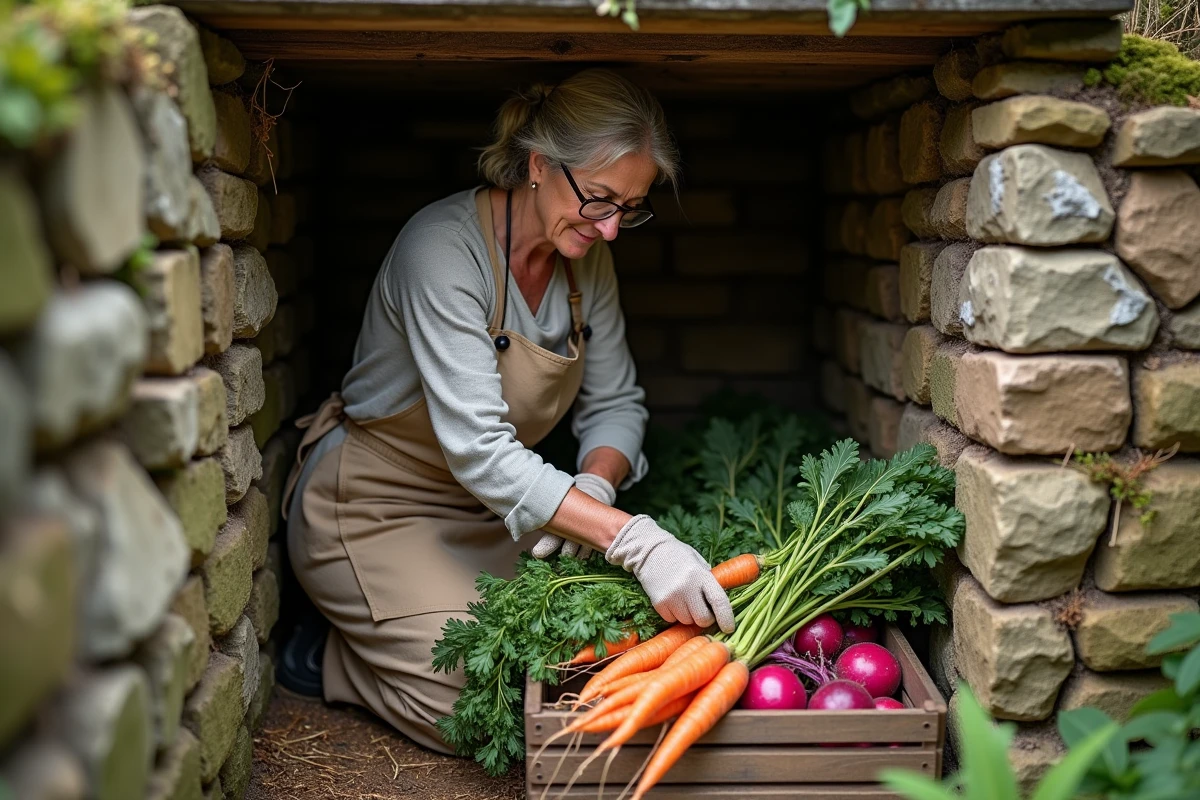
Storing vegetables and fruits after harvest without resorting to an industrial refrigerator or a buried cellar presents a specific technical challenge: maintaining a low temperature and stable humidity in an insulated volume exposed to external climatic variations. The ecological outdoor cold room attempts to solve this equation by combining bio-based insulation, low-impact refrigerants, and, in some cases, direct solar power.
Bio-based insulation and thickness: the real lever of an ecological cold room in the garden
The classic competitors of an ecological cold room are not other cold rooms: they are industrial sandwich panels made of polyurethane foam, six to eight centimeters thick. They provide adequate insulation, but their environmental impact (embodied energy, end of life) contradicts the approach of a gardener concerned about their harvests and carbon footprint.
The ecological logic is based on a simple principle: significantly increase the thickness of bio-based insulation to compensate for its slightly higher thermal conductivity compared to synthetic insulation. Ecological construction guides recommend, for example, around forty centimeters of straw bales, where a PIR panel would only require eight.
Anyone wishing to install an ecological outdoor cold room must therefore plan for a structure volume much larger than that of a prefabricated box. The trade-off is often a lower material cost, especially if local straw bales or insulation panels from deconstruction are reused.
In recent years, field reports have confirmed the interest in reusing construction site insulation panels (PIR, rock wool) to build very low-cost cold rooms. This “low-tech” approach reduces the insulation budget to almost nothing, provided the condition of the panels is checked (absence of mold, thermal continuity at the joints).
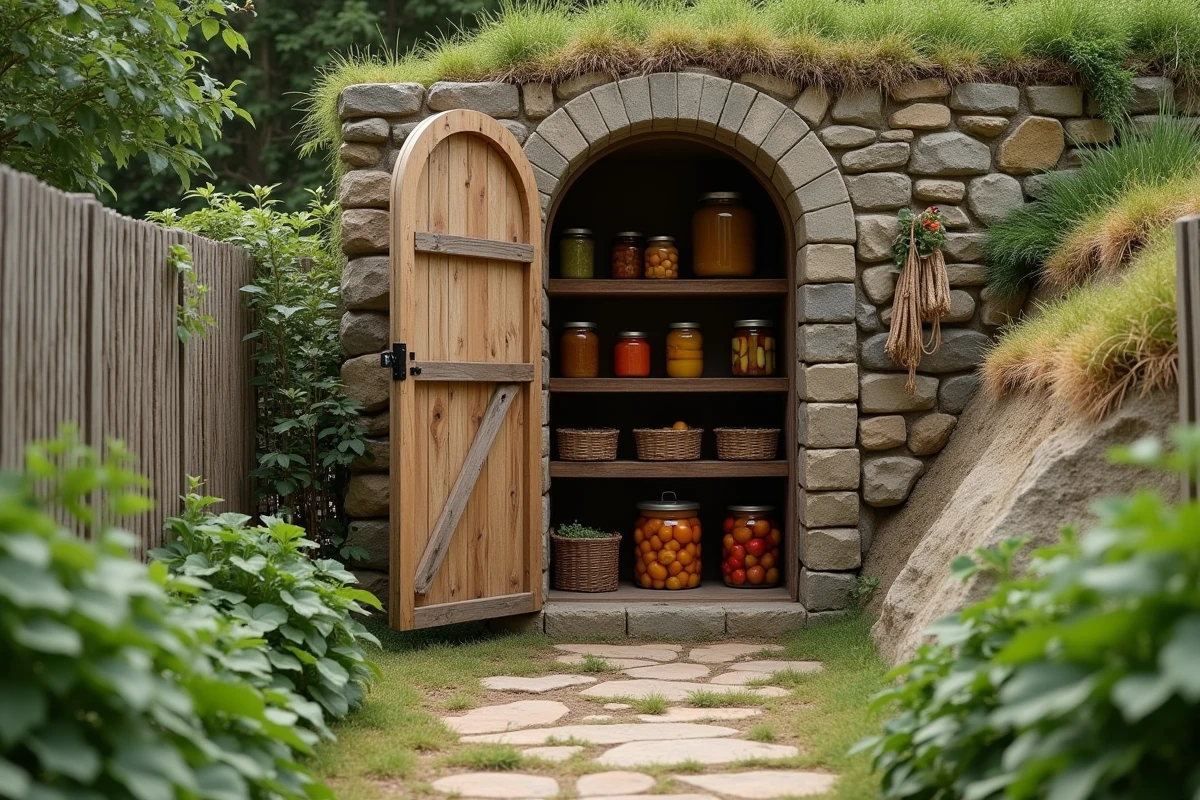
Low global warming potential refrigerants: what the revised F-Gas regulation changes
A rarely addressed point in gardening guides: the choice of refrigerant in the small refrigeration unit that equips the chamber. The revised F-Gas regulation (EU 2024/573) accelerates the phase-out of traditional HFCs, including for small prefabricated installations intended for domestic or market gardening use.
Manufacturers’ catalogs show a rapid decline in HFC supply in favor of two main alternatives:
- Propane (R-290), a natural refrigerant with very low global warming potential, suitable for small refrigeration units but classified as flammable, which imposes ventilation constraints around the compressor.
- CO₂ (R-744), mainly used in larger installations, with a high operating pressure that complicates maintenance.
- Hydrofluoro-olefin (HFO) blends, less common in small models and whose overall environmental impact is still debated.
For a gardener installing an outdoor cold room of a few cubic meters, propane remains the most coherent choice. It is essential to ensure that the chosen refrigeration unit is certified for outdoor use and that the space around the compressor allows for sufficient natural ventilation.
Direct current solar power: a credible option for small volumes
Since 2022, projects documented by FAO and the SELCO foundation have shown that it is possible to power a small cold room directly with DC from solar panels, without an inverter. This architecture simplifies installation and reduces conversion losses.
Field reports indicate a significant reduction in electricity consumption compared to a traditional AC system. The DC compressor operates at variable speed, allowing it to modulate its power based on available sunlight and actual thermal load.
Known limitations of DC solar power
The available data do not yet allow for conclusions about the long-term reliability of these DC compressors in a continental climate with significant thermal amplitudes. Field reports vary on this point: some users report a lifespan comparable to AC compressors, while others observe premature wear of electronic components.
Autonomy without batteries remains limited to sunlight hours. To maintain temperature at night, storage via batteries or thermal inertia (water mass, concrete slabs) becomes necessary, which increases the cost and complexity of the system.
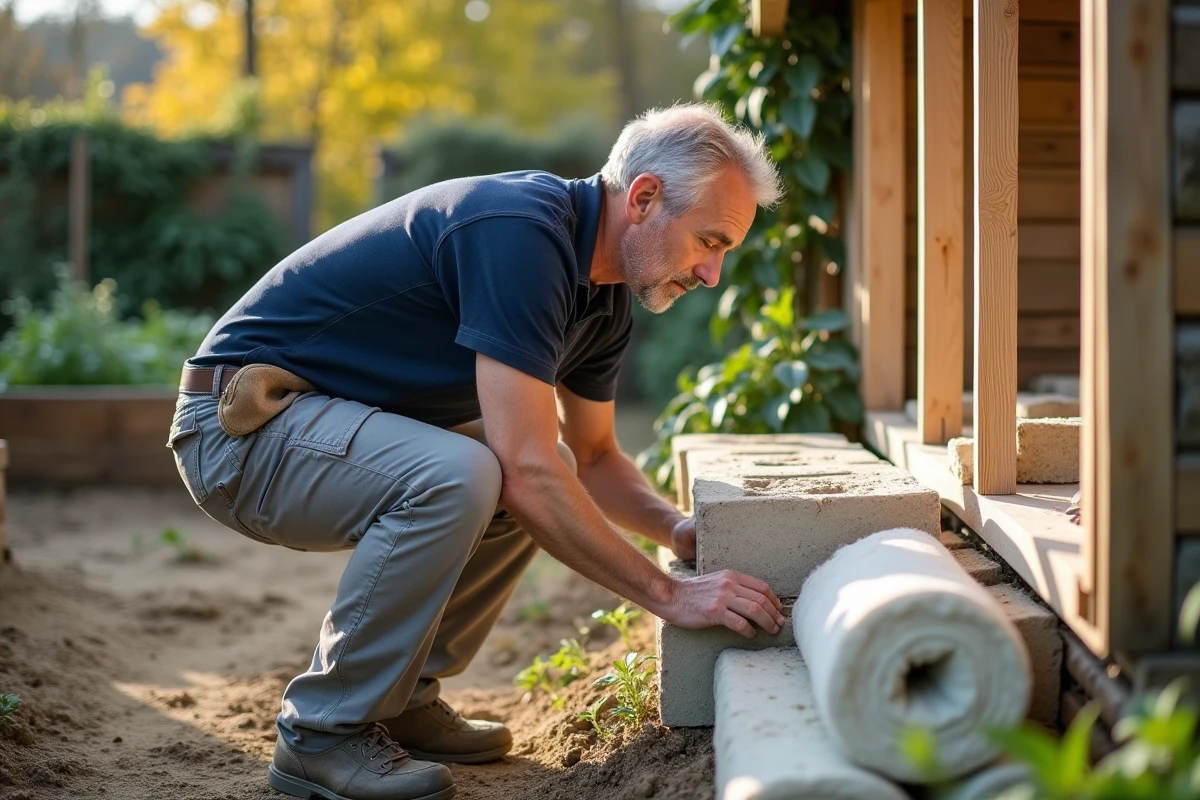
Wood frame construction: moisture management and vapor tightness
A cold room stores living vegetables that transpire. The relative humidity inside must remain high (often above 85%) to prevent wilting, but this water vapor must not migrate into the insulation, as it would degrade it.
The choice of interior cladding determines the durability of the structure. Two approaches coexist:
- A vapor-tight cladding (polyethylene film on the warm side, meaning the inside of the cold room in summer, the outside in winter) that blocks vapor migration but creates a risk of condensation if the installation is not perfect.
- A vapor-permeable cladding, combined with moisture-tolerant insulation (wood wool, clay-coated straw), which allows the wall to dry naturally but requires controlled ventilation.
- An intermediate solution with a hygroscopic vapor barrier, whose permeability adapts to the ambient humidity level.
The junction between the floor slab and the walls is the main weak point. This is where breaking the thermal bridge is most difficult to achieve with bio-based materials. Placing the wood frame on a treated sole plate, which is itself placed on an incompressible insulation (cork, cellular glass), limits capillary rise and thermal losses through the ground.
Door and refrigeration unit: two details that change the energy balance
The door represents the largest uninsulated surface of the cold room. An insulated door with a magnetic seal reduces the infiltration of warm air. Some self-builders use a second-hand cold room door, which remains the most reliable solution if the seal is in good condition.
The sizing of the refrigeration unit depends on the insulated volume, the thickness of the insulation, and the maximum outdoor temperature in summer. An oversized unit consumes more at startup and cycles too frequently, which reduces its lifespan. An undersized unit fails to maintain the set temperature during heat peaks.
The ecological outdoor cold room in the garden is not a plug-and-play project. Each technical choice (insulation, refrigerant, power supply, cladding) entails measurable trade-offs on cost, durability, and thermal performance. Low-tech solutions and reused materials make the project accessible, provided one accepts a longer design phase than with an industrial box.