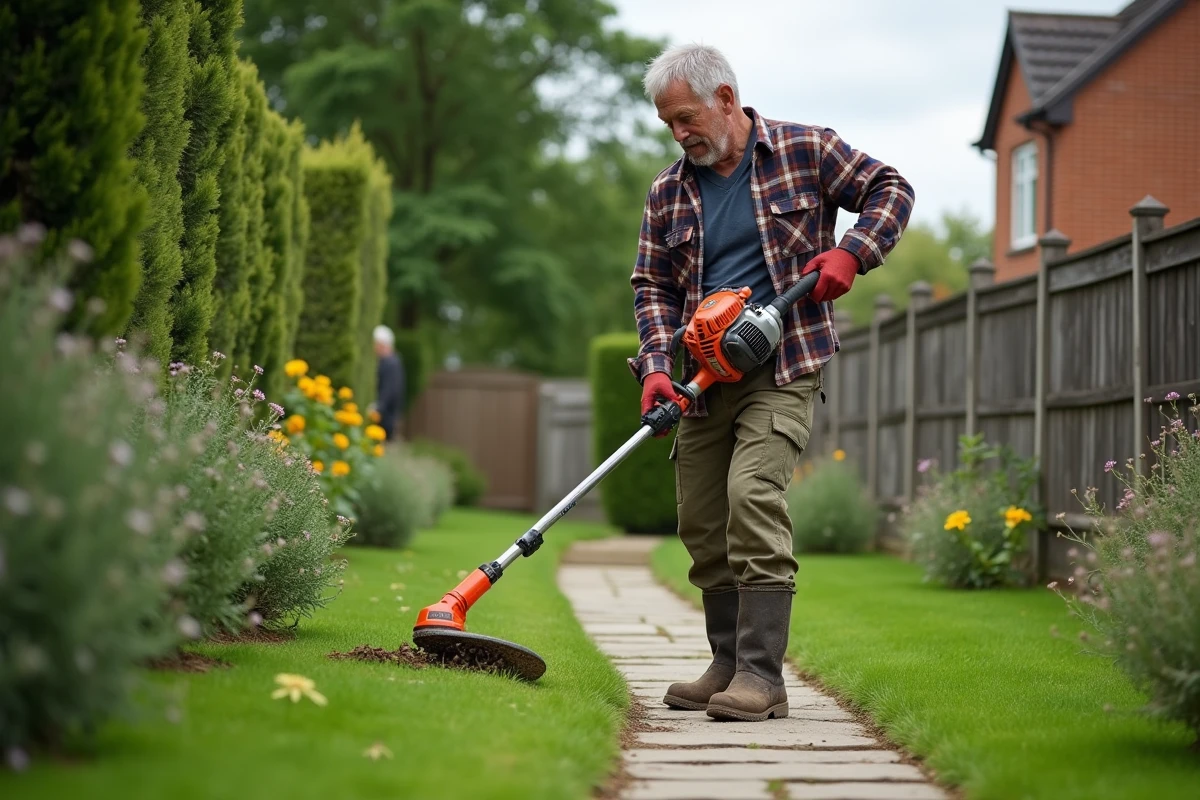
A sloped area with stone walls, flowerbed borders overrun with grasses, a ditch at the property line: this is the kind of situation where an electric trimmer quickly shows its limits. The gas trimmer remains the most direct answer when working far from a power outlet, on uneven surfaces, or facing dense vegetation.
However, it is essential to choose the right model, as the range goes from a small backup trimmer to a semi-professional machine capable of replacing a lightweight brush cutter.
Alkylate fuel and SP95-E10 compatibility: the criterion that manuals reveal in small print
People often start by comparing power or price, but the type of fuel accepted by the engine determines medium-term reliability. Several recent brands specify in their manuals the compatibility (or lack thereof) with SP95-E10. This detail has direct consequences.
SP95-E10 contains a portion of ethanol that attacks the carburetor membranes on small two-stroke engines. After a few months of winter storage, you may find a trimmer that refuses to start. Professionals in the gardening equipment field now recommend ready-to-use alkylate fuel to limit fouling and restart failures.
Specifically, on coupebordurethermique.fr, you can find specifications that clarify this point for each model. Before purchasing, check the manufacturer’s manual: an engine designed to run exclusively on alkylate mix will cost a bit more in fuel but will avoid a trip to the workshop every spring.
Power of the gas trimmer: matching engine displacement to the terrain
The power of a gas trimmer is measured in engine displacement (cm³) rather than watts. This is a more reliable indicator than marketing claims.
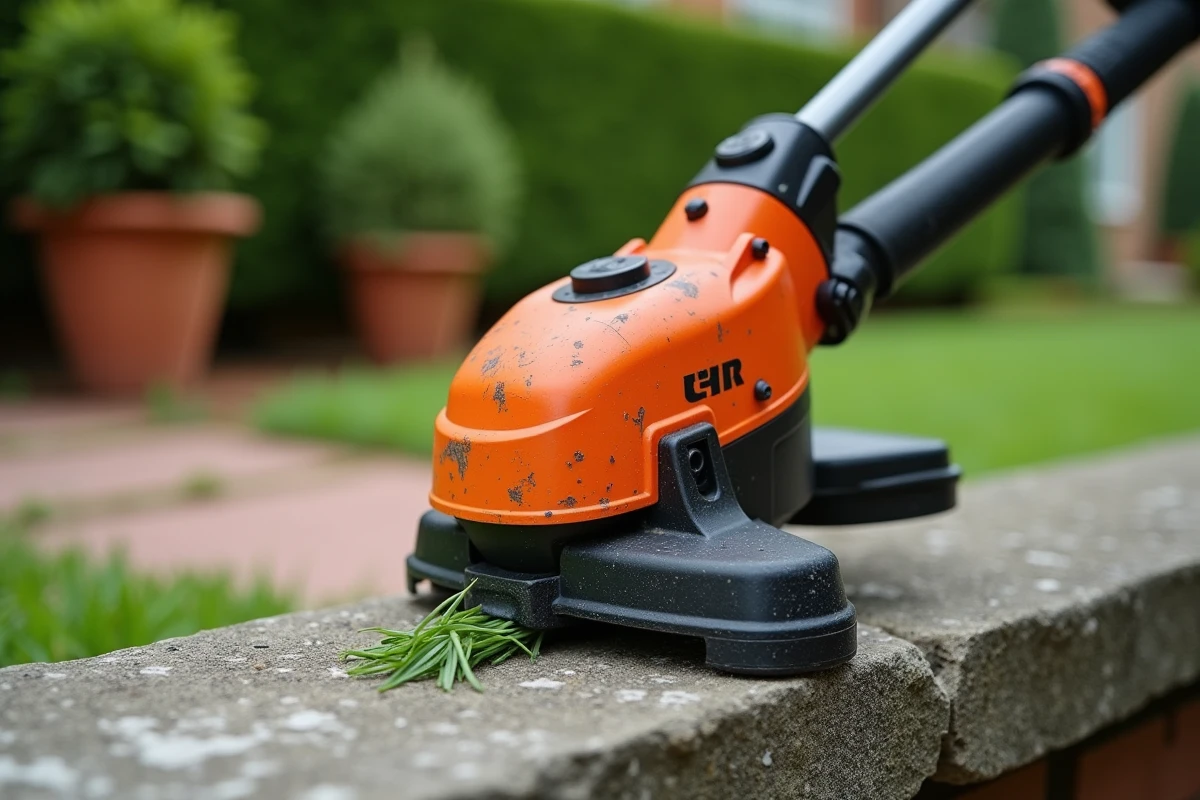
For a garden with standard lawn borders and a few flowerbeds, a modest displacement is more than sufficient. The machine remains lightweight, and standard nylon line does the job. However, as soon as you tackle tall grasses, brambles at the fence line, or steep slopes, a higher displacement prevents the engine from stalling under load.
A common pitfall: buying an overly powerful model for a small flat garden. You end up with a heavy, noisy tool that consumes more fuel, without any real benefit. The opposite is equally problematic; an undersized engine pushed to its limits wears out prematurely.
Nylon line or blade head: based on vegetation, not budget
The cutting head determines what the machine can actually cut. Nylon line is suitable for grass and finishing along paths. For brush or thick nettles, some models accept a plastic blade head or a metal disc, bringing them closer to a brush cutter.
- Round nylon line: common use, lawn borders, hedge bases. Simple and economical replacement.
- Notched or reinforced nylon line: dense grasses, tough grasses. Better cutting but faster wear on hard ground.
- Plastic knife head: light brambles, nettles, semi-woody vegetation. Less debris projection than line.
- Metal disc (on compatible models): heavy-duty work, nearly a brush cutter. Requires a harness and appropriate guard.
Check the compatibility of the cutting head before purchasing. Not all gas trimmers accept blades, even when the power would allow it.
Local noise restrictions: a now concrete selection criterion
Several French municipalities regulate the hours of use for gas-powered equipment in residential areas through municipal decrees. Specifically, check the authorized time slots in your municipality before investing in a gas model. During certain time frames, only electric or battery-operated devices are tolerated.
This point has led some manufacturers to incorporate noise reduction systems or catalytic exhausts in their latest models. Feedback on this varies: some users notice a real difference, while others find the gain marginal. What is certain is that recent low-emission engines better respect noise thresholds than older classic two-strokes.
If you live in a housing development with close neighbors, this criterion weighs as much as power in the final choice.
Maintenance of the gas trimmer: actions that prevent workshop visits
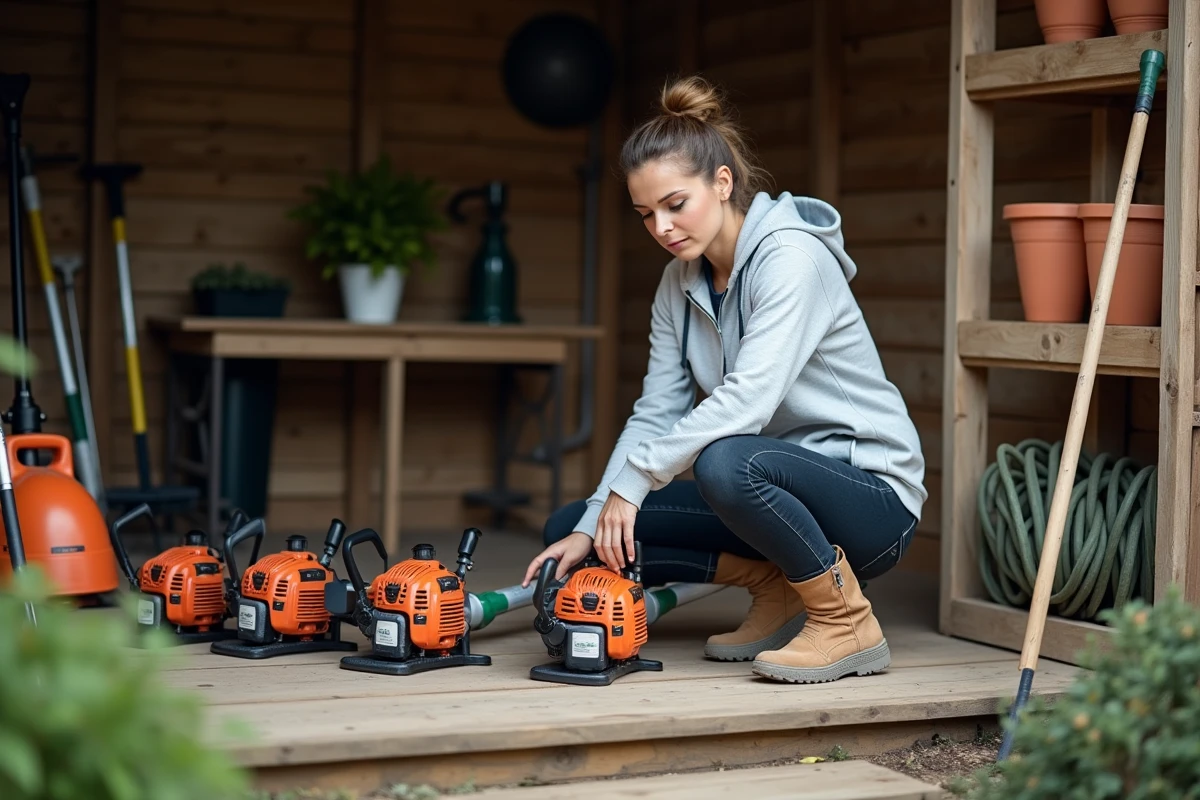
A gas trimmer requires more maintenance than an electric model. This is the compromise for autonomy and power. A few regular actions are enough to keep the machine in good condition.
- Clean the air filter every few uses, more often in dusty conditions. A clogged filter increases consumption and reduces power.
- Drain the fuel before winter storage or use a fuel stabilizer. This is the primary cause of failure during spring restart.
- Check the spark plug once per season. A dirty spark plug causes misfires and starting difficulties.
- Inspect the condition of the protective guard and harness (on heavier models). A cracked guard exposes the user to debris projections.
On a two-stroke model, the oil-gas mixture must respect the ratio indicated by the manufacturer. An approximate dosage leads either to engine fouling (too much oil) or premature piston wear (not enough).
Stihl, Husqvarna, and others: the availability of parts matters as much as the brand
You can find gas trimmers from Stihl, Husqvarna, Echo, or large retail brands. The often overlooked criterion is the availability of spare parts and access to a repair network. A model from a recognized brand with a local dealer facilitates repairs. A device purchased online without a service network becomes disposable at the first serious breakdown.
The choice of a gas trimmer hinges on three concrete axes: fuel compatibility for reliability, displacement suited to the actual terrain, and the possibility of local repairs. A well-sized model for its garden, fueled with the right gasoline, and maintained each season, will easily last several years of service without needing a workshop visit.