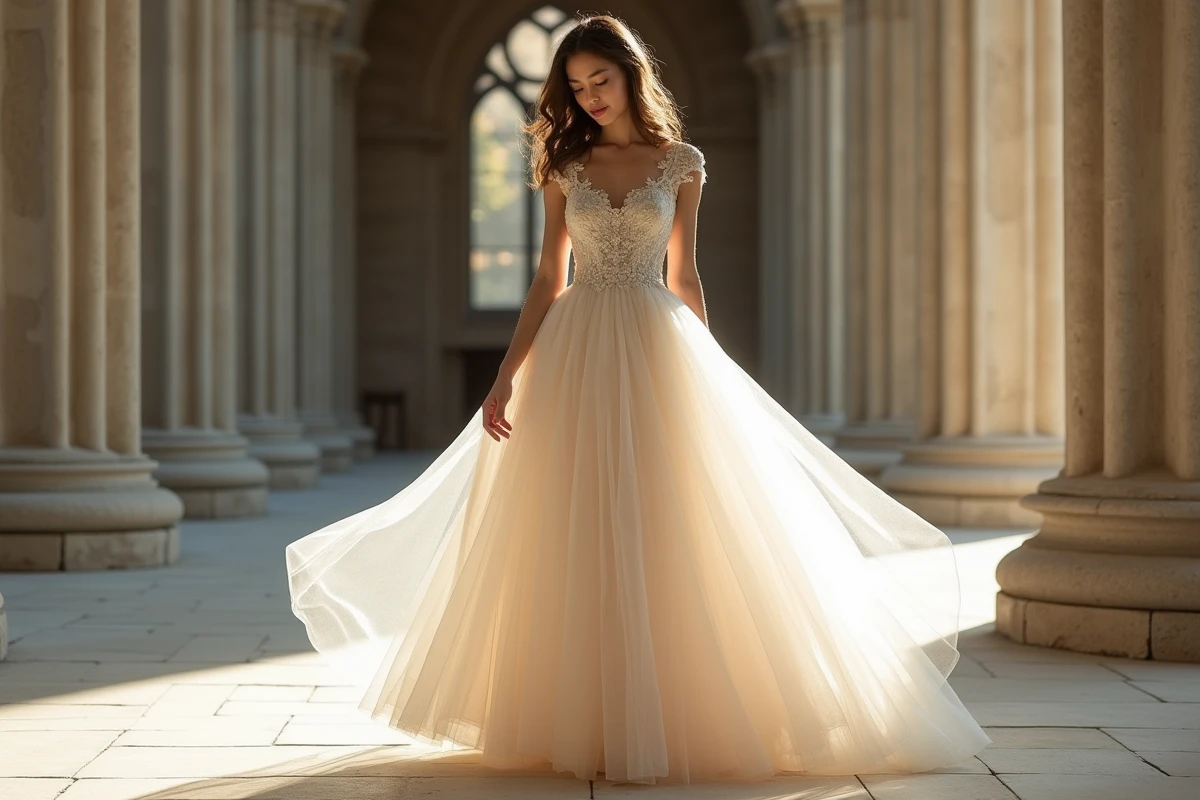
When preparing for fittings, tulle is often the first fabric touched on a wedding dress hanger. Light and airy, it adds volume without weighing down the silhouette. However, not all tulles are created equal, and choosing the right weight or composition can radically change the drape, comfort on the skin, and the dress’s hold throughout an entire day.
Chemical Treatments of Cheap Tulle and Risks of Skin Allergies
We don’t always think about it, but entry-level polyester tulle undergoes finishing treatments to give it rigidity and a shiny appearance. These finishes contain formaldehyde resins and bleaching agents that remain trapped in the fibers. On skin already stressed by makeup and heat, these chemical residues can cause redness, itching, or contact eczema.
The problem mainly arises in friction areas: armholes, neckline, waist. A cotton or silk lining between the skin and the tulle reduces direct contact but does not eliminate the risk if the fabric sweats.
- Ask the seller or seamstress for the exact composition sheet of the tulle, including the finishing treatments applied.
- Wash the tulle in cold water before assembly to remove some of the finishing residues, first checking on a sample that the fabric does not deform.
- Prefer a tulle certified Oeko-Tex Standard 100, which guarantees the absence of harmful substances beyond a controlled threshold.
- Consider tulle made from plant fibers (lyocell) for sensitive skin: more breathable and naturally hypoallergenic, it has recently been offered by some French couture workshops.
We explore in detail tulle fabric for wedding dresses in all its practical aspects to make an informed choice.
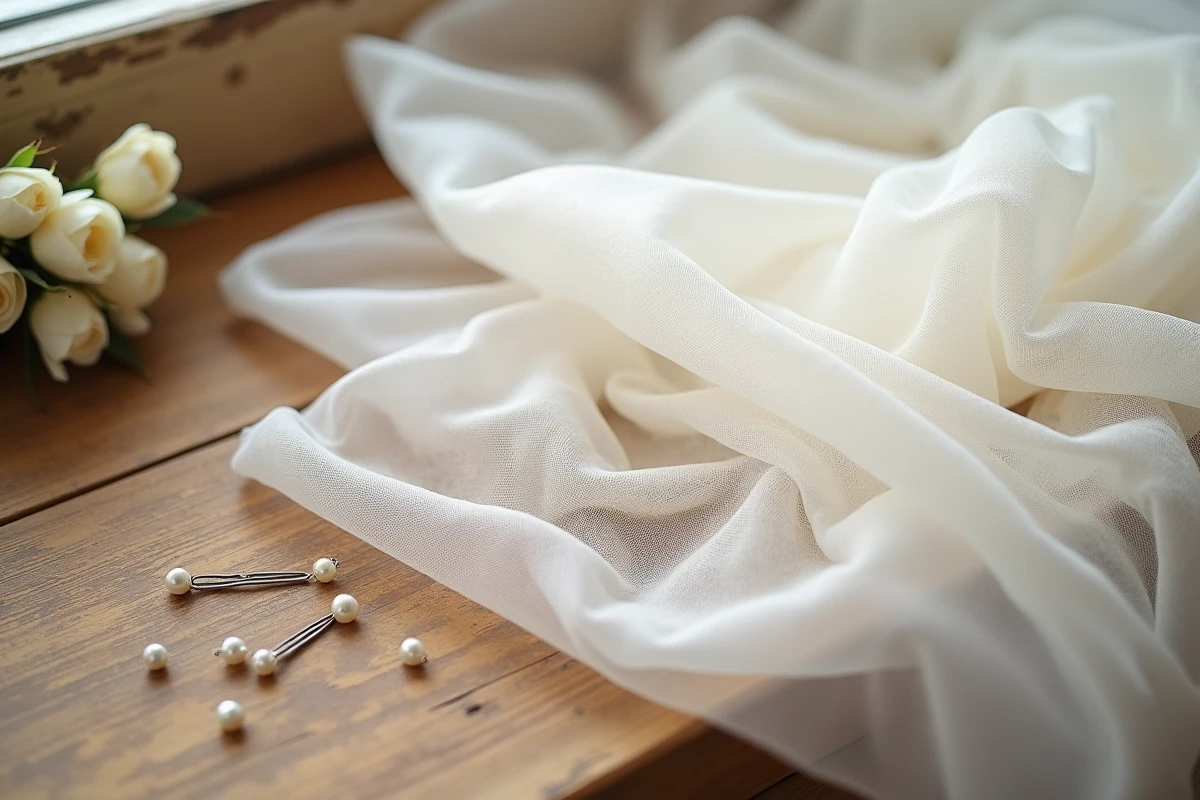
Silk Tulle, Nylon Tulle, Polyester Tulle: What Changes in Practice
In stores, we read “tulle” on the label without further precision. However, the fiber used alters the visual effect, thermal comfort, and price of the dress.
Silk Tulle
This is the softest and most delicate to the touch. It drapes naturally, does not scratch, and breathes well. Its appearance is slightly matte, almost powdery. It is found in high-end creations, as its price per meter is significantly higher than synthetic alternatives. Silk tulle is suitable for flowing dresses and long veils that need to move with the body without stiffness.
Nylon Tulle
Stiffer than silk, it holds volume better. This is the classic tulle for petticoats and crinoline skirts. It has a slight sheen and a firm hand that allows for a structured princess effect. Its durability over time is decent, but it can yellow over the years if not stored properly.
Polyester Tulle
The most common and least expensive. It comes in many colors (ivory, white, champagne, blush). Its rigidity varies according to the weight. A well-chosen polyester tulle offers good value for money for voluminous skirts, but it is less breathable than silk or nylon. It is also the one that concentrates the most chemical finishing treatments, hence the importance of the checks mentioned above.
Tulle and Wedding Season: Adapting the Fabric to Real Conditions
The impact of the weather on tulle behavior is often underestimated. In summer, dense polyester tulle in multiple layers retains heat. The bride sweats more, the fabric sticks, and comfort drops from the first hour of the ceremony.
For a summer wedding, reduce the number of layers of tulle or choose a lighter weight. Silk tulle, even in double thickness, allows air to circulate better than thick single-layer polyester.
For outdoor ceremonies where rain is likely (feedback varies on this point depending on the regions), textured wrinkle-resistant tulle has a concrete advantage: it regains its shape after being wet and compressed, whereas classic tulle retains creases. This type of tulle is gaining ground for weddings in Northern Europe, where weather conditions are rarely guaranteed.
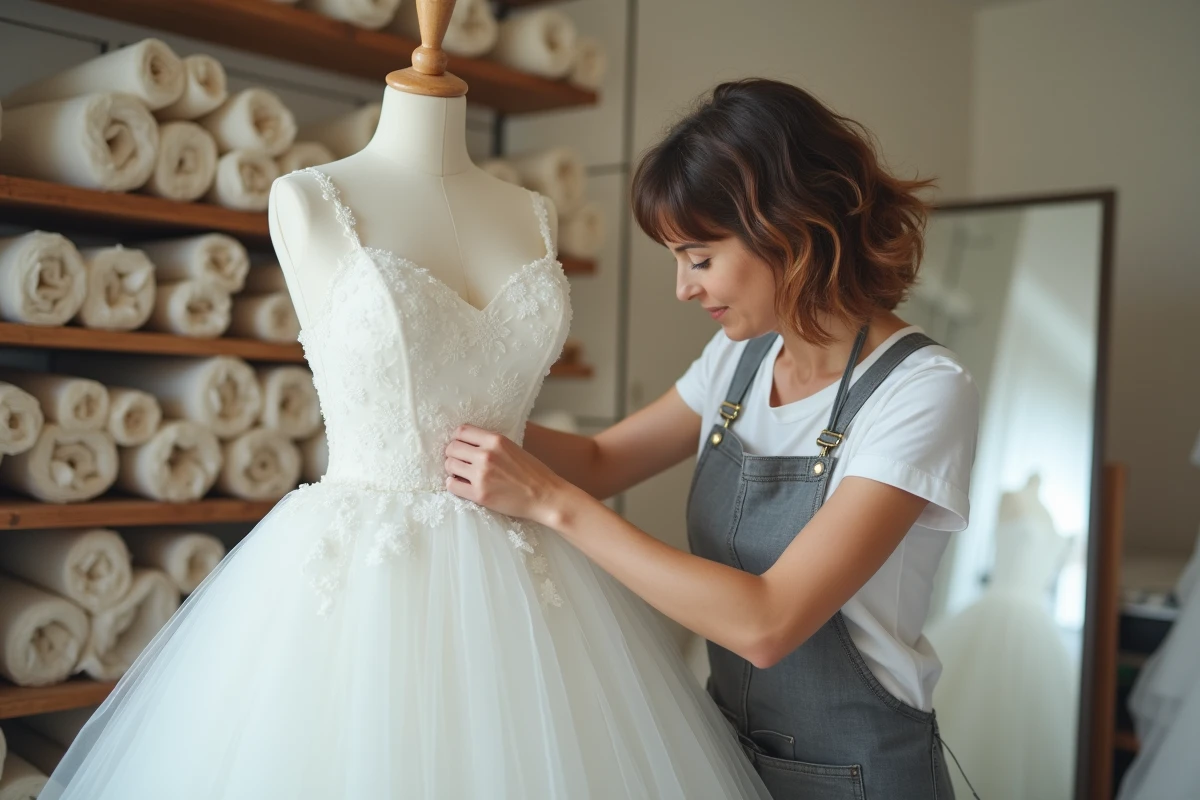
Recycled Tulle and Sustainable Alternatives for an Eco-Responsible Wedding Dress
Recycled tulle, made from polyester threads derived from textile waste or plastic bottles, is gradually becoming part of the offerings from eco-responsible brands. Its appearance and feel are similar to conventional tulle, with a reduced environmental footprint.
Lyocell tulle is the most interesting alternative for reactive skin. Made from wood pulp, it is biodegradable, soft to the touch, and does not require the same finishing treatments as polyester. Some French sewing workshops already offer this fiber for custom creations.
Choosing durable tulle does not come at the expense of appearance. You can achieve generous volume, fluid drape, or marked structure by selecting the right weight and weave, regardless of the fiber’s origin.
Care for Wedding Dress Tulle: Important Steps
Tulle creases easily and catches sharp objects. Hanging the dress on a padded hanger and protecting it with a breathable fabric cover (no plastic) is enough to avoid most accidents before the big day.
If the tulle is wrinkled, gentle steam from a distance remains the safest method. Never place an iron directly on the tulle, even at low temperature, as synthetic fibers can melt or shrink. For cleaning after the wedding, a specialized wedding dress dry cleaner will know how to treat the tulle without altering its ivory or white color.
Long-term storage requires a dry place, away from light. Nylon tulle yellows in natural light, while polyester holds up better but can build up static electricity in an overly dry environment. Acid-free tissue paper placed between layers of tulle protects the fabric from friction and oxidation.