
The decency decree has long set a threshold for habitable space in rented housing. With the texts adopted at the end of 2025 and the Jeanbrun scheme coming into effect in early 2026, owners of service rooms, studio apartments, and micro-units face a concrete decision: retain, restructure, or sell. Here, we detail the technical mechanisms and the property scenarios that arise from this.
Jeanbrun Tax Bonus and Micro-Unit Consolidation
The Housing Recovery scheme (known as Jeanbrun) introduces a targeted tax advantage for very small housing units. Specifically, service rooms, studio apartments, and former small lots benefit from a strengthened tax bonus when they are consolidated or restructured to achieve a better level of comfort and energy performance.
The depreciation provided by the scheme applies to the acquisition price excluding land and to the costs of reunification. For an owner holding two adjacent service rooms, merging them into a studio that meets decency standards allows for the accumulation of the Jeanbrun depreciation with deductions for renovation costs and loan interest.
We observe that the law on small rooms in 2026 clearly pushes owners towards restructuring rather than maintaining energy-intensive micro-housing. The fiscal signal is clear: the legislator wants to reduce the stock of isolated lots below the decency threshold.
However, the mechanism requires a commitment to unfurnished rental as a principal residence for a minimum duration of nine years. Any early termination results in a tax recapture. Real estate investment companies (SCIs) taxed under personal income tax and undivided estates are eligible, but structures subject to corporate tax are excluded as they already depreciate according to their own accounting rules.
PLU Controls and Urban Planning Declarations in Major Cities
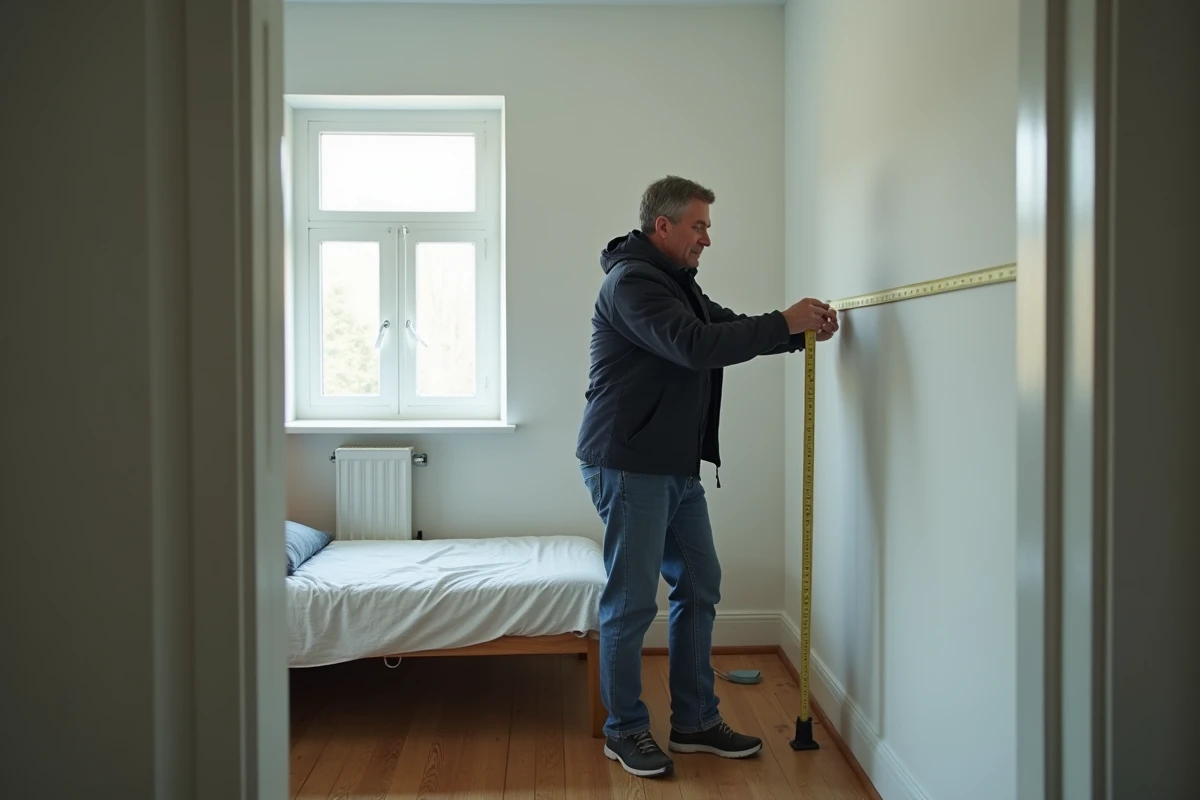
Paris, Lyon, and Bordeaux have begun to lower the minimum acceptable areas in their PLUs for future divisions. This local evolution overlaps with national decency standards and creates a double constraint for owners of small rooms.
In practice, an owner wishing to maintain an old small unit for rent must verify the urban planning compliance of their division even before considering the energy performance diagnosis (DPE) or decency. In the affected municipalities, a declaration or regularization of urban planning may be required.
- Check the compliance of the unit with the current PLU (minimum area, access, natural lighting)
- Submit a prior declaration if the unit results from an unregulated division
- Ensure that the DPE of the unit is valid according to the new 2026 calculation method (lowered electricity conversion factor)
- Anticipate a possible refusal to renew the lease if the housing is reclassified as indecent
This local regulatory layer is often overlooked by owners who focus solely on the national area criterion. We recommend consulting the municipal urban planning service before any rental commitment or sale.
Sell, Reunify, or Renovate: Three Scenarios Over Ten Years
The choice between these three strategies depends on the physical configuration of the unit, its location, and the owner’s tax regime. No option systematically prevails.
Sell the Isolated Unit
Selling remains relevant when reunification is physically impossible (enclosed unit, hostile co-ownership, load-bearing walls). The market for small units has lost attractiveness since the tightening of decency standards, which compresses exit prices. A unit rated F or G on the DPE suffers an additional discount.
Over ten years, immediate sale avoids compliance costs but crystallizes a capital loss if the property has been owned for a long time at a price higher than the current market.
Reunify Two Adjacent Units
This is the scenario that the Jeanbrun scheme favors fiscally. Merging two service rooms into a housing unit that meets decency and energy performance criteria entitles the owner to enhanced depreciation. The cost of reunification works is fully deductible from rental income under the scheme.
The main risk is the duration of commitment: a minimum of nine years in unfurnished rental. If the owner wishes to reclaim the property for personal use or switch to furnished tourist rental before this term, the tax recapture nullifies the benefit.
Renovate to Maintain the Unit as Is
Renovating a micro-unit without consolidating it remains possible, but the owner loses the Jeanbrun bonus and must still meet the energy decency threshold. Since January 1, 2026, the new electricity to primary energy conversion factor (lowered from the previous coefficient) may suffice to upgrade some electrically heated units from an F to an E rating, without any work.
This automatic improvement of the DPE does not exempt compliance with the minimum area. A unit whose habitable area remains below the regulatory threshold cannot be re-rented, even with an acceptable DPE.
Tax Regime and Commitment Duration: Key Points of Caution
The Jeanbrun scheme targets unfurnished rental as a principal residence. Owners who operate their rooms as furnished tourist rentals or under mobility leases do not have access to it. Moreover, the Le Meur law already limits seasonal rentals to 90 days per year for secondary residences in tight zones, with mandatory declaration at the town hall and registration on platforms.
Combining the constraints of the Le Meur law and the exclusion from the Jeanbrun scheme makes furnished tourist rentals unviable for micro-units in tight zones. The BIC regime, once advantageous in this segment, loses its appeal in the face of combined regulatory pressure.
- Long-term unfurnished rental with Jeanbrun: depreciation and deduction of works, nine-year commitment
- Furnished tourist rental: capped at 90 days in tight zones, no Jeanbrun bonus, mandatory registration at the town hall
- Mobility lease: short duration (one to ten months), no access to the Jeanbrun scheme, standard BIC regime
The choice of tax regime conditions the net profitability over the commitment duration. An owner in an SCI taxed under personal income tax who consolidates two units and commits to nine years of unfurnished rental benefits from a tax leverage that neither furnished rentals nor sales can replicate, provided they maintain the duration without interruption.
The 2026 law redistributes the cards asymmetrically. Owners capable of consolidating adjacent units gain a structural tax advantage. Those who hold an isolated and non-consolidable unit find themselves facing a degraded resale market and decency standards that make re-renting uncertain. The determining factor is no longer the area of the unit, but its physical position in the building and the owner’s ability to commit for nine years.