
Have you ever felt a slump in the middle of a set of squats or a run? This lack of energy often comes from a poor choice of fuel before the effort. Pre-workout carbohydrates are the most direct lever to fuel your muscles, but not all are created equal. The type of carbohydrate, the timing of consumption, and the form in which you take it radically change what happens in your muscle fibers.
Glycemic index and muscle contraction: what timing really changes
Why do two athletes who eat the same amount of pasta not achieve the same results? The answer partly lies in the glycemic index (GI) of the food and the timing of ingestion.
A high-GI food (white bread, white rice, jam) releases glucose quickly into the blood. If taken too early, this spike drops off before the session even begins. If taken within the right window, it provides immediate fuel to the muscles.
In contrast, a moderate-GI food (oatmeal, sweet potato, whole grain bread) releases its energy more slowly. It is better suited when the meal precedes the effort by one to two hours.
Recent research in sports nutrition shows that a supply of carbohydrates taken 30 to 60 minutes before a strength training session improves the quality of neuromuscular contraction. Power decreases less from one set to the next, compared to a supply taken more than two hours prior or on an empty stomach. The explanation: glucose remains available at the precise moment when fast fibers need it.
The winning combination according to this research: moderate glycemic index carbohydrates combined with a small dose of protein, in the form of a carbohydrate-protein drink, for example. This duo allows for better recruitment of fast fibers at the end of the session, where fatigue sets in. To identify the best pre-workout carbohydrates suited to your practice, you need to cross-reference the type of carbohydrate with your consumption window.

Pre-workout carbohydrates in a targeted ketogenic diet: a small dose is enough
If you follow a low-carb or ketogenic diet, the question of pre-workout nutrition arises differently. Muscle glycogen is consistently low. Intense sessions (sprints, circuits, heavy lifting) suffer directly from this.
A strategy called “targeted ketogenic” involves staying low in carbohydrates daily but taking a small targeted dose of glucose or maltodextrin just before intense sessions. Recent syntheses indicate a range of 15 to 30 g, equivalent to a ripe banana or a tablespoon of diluted maltodextrin.
The form matters as much as the quantity in this specific case. A drink digests faster than solid food. For a body accustomed to very few carbohydrates, reintroducing a solid starchy food can cause digestive issues (bloating, cramps). The liquid form limits gastrointestinal discomfort and speeds up the availability of glucose.
Solid, liquid, or gel: choose the form according to the type of effort
The debate is not only about which food to eat but also about how to consume it. Here are the three main options and their contexts of use:
- A solid meal (brown rice, oatmeal, whole grain bread with a bit of peanut butter) works well when you have at least an hour before the effort. Slow digestion ensures a steady supply.
- A carbohydrate or carbohydrate-protein drink is preferable when there are less than 45 minutes before the session, or if you have a sensitive stomach. It passes through the stomach quickly.
- A gel or drinkable applesauce is suitable as a last-minute solution, 15 to 20 minutes before the effort. Energy arrives quickly, but the quantity remains limited.
Do you practice an endurance sport (long-distance running, cycling)? The combination of a solid meal two hours before, followed by a small carbohydrate drink 30 minutes before the start, covers both phases: base reserves and immediate availability.
For weight training or intermittent effort sports, a moderate carbohydrate snack with a medium GI taken 45 minutes prior is usually sufficient. There’s no need to load up as much as before a marathon.
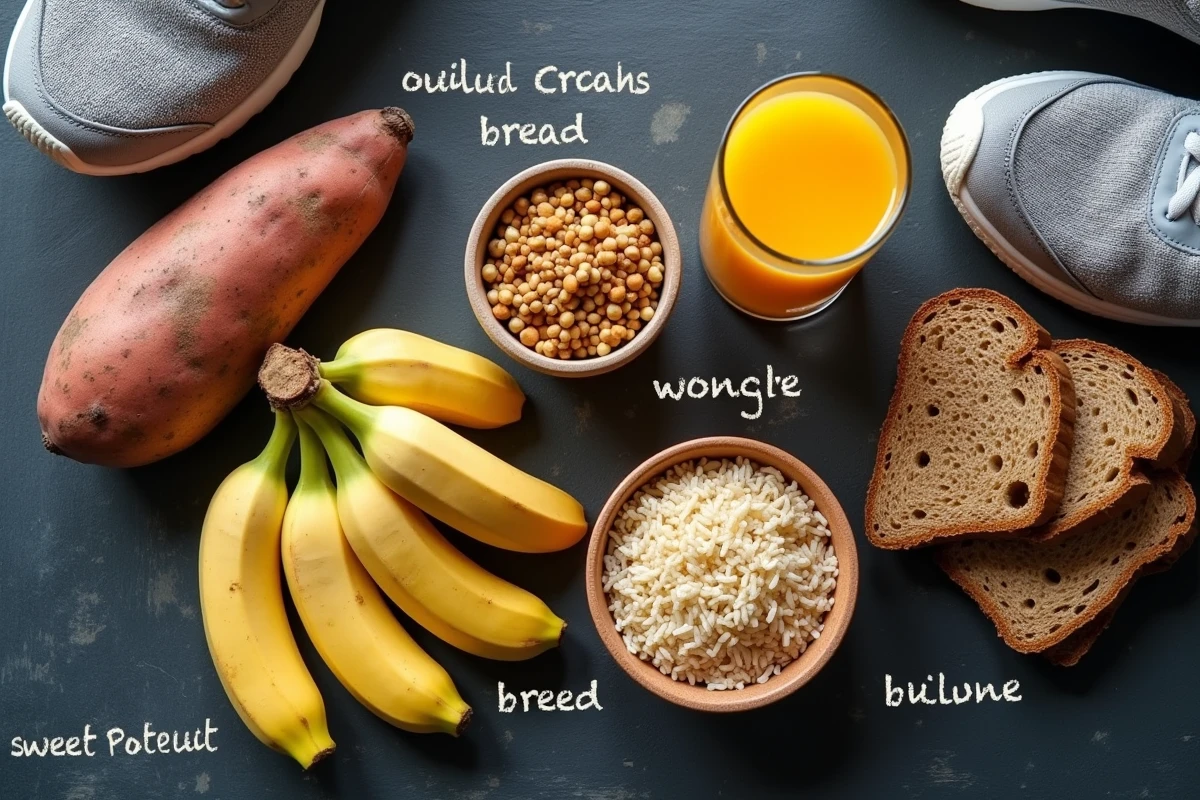
Concrete foods to test according to your time window
Theory is useless without a practical list of foods. Here’s a simple guide organized by available time before training:
More than an hour before the session
Oatmeal remains a reliable choice: moderate GI, good energy density, easy to prepare. Cooked sweet potato or brown rice serve the same role. Add a light protein source (plain yogurt, a few almonds) to benefit from the combined effect of carbohydrates and proteins on muscle recruitment.
Less than 45 minutes before the session
A ripe banana is the most accessible option: GI increases with the fruit’s ripeness, quick digestion, and few troublesome fibers. Dried fruits (dates, raisins) offer high energy density in a small volume, convenient when time is short.
Less than 20 minutes before the session
At this stage, only a liquid or semi-liquid intake has time to be absorbed. A drink with a bit of maltodextrin or an unsweetened applesauce does the job without overloading the stomach.
- More than an hour: oatmeal, sweet potato, brown rice + light protein
- Less than 45 min: ripe banana, dates, white bread with a bit of honey
- Less than 20 min: carbohydrate drink, applesauce, energy gel
Adapting the form and type of carbohydrates to your time window remains the factor that separates a productive session from a lackluster workout. Test different combinations over several sessions before settling on your routine. Digestive sensations vary from person to person, and the best pre-workout carbohydrate is the one your body tolerates well while providing enough energy to last until the last repetition.