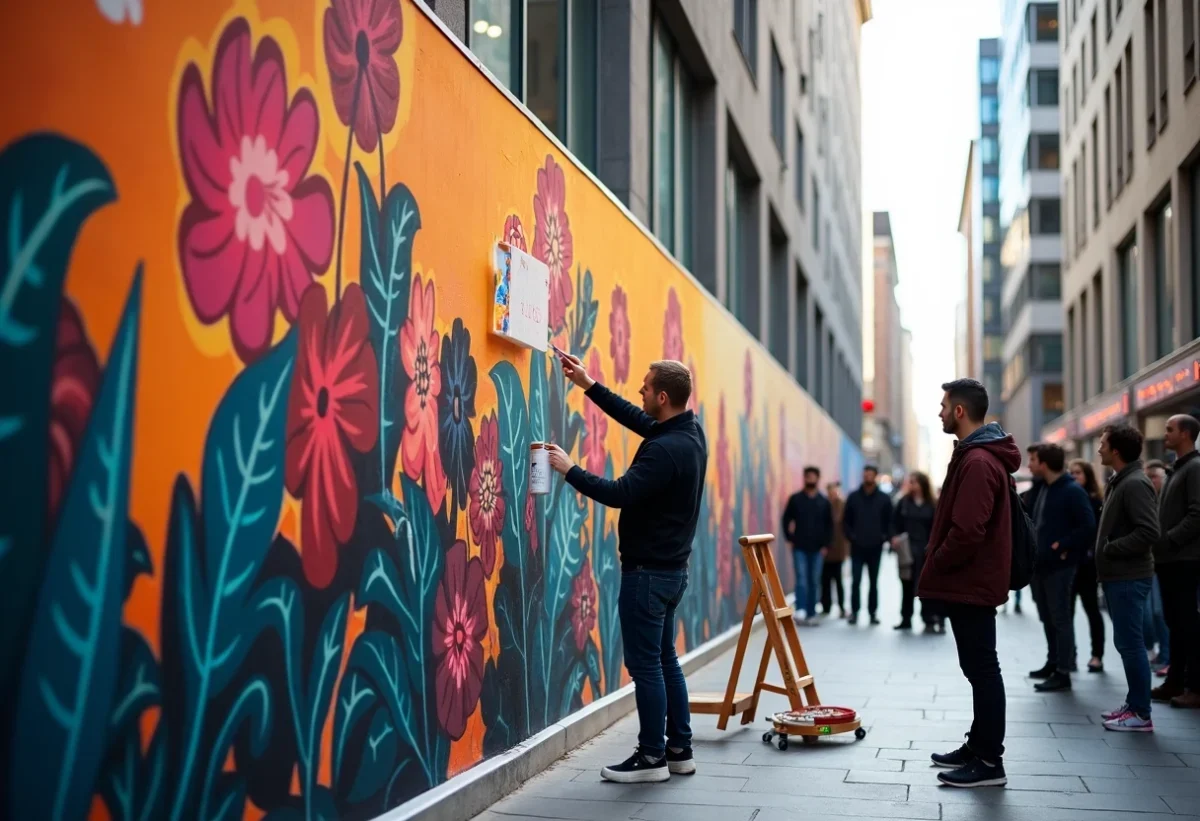
Contemporary artists are constantly redefining the boundaries of creativity, introducing new forms of expression and challenging established norms. They integrate modern technologies, explore social and environmental themes, and break traditional conventions, thus offering a renewed perspective on art.
Their influence is also manifested in galleries, museums, and public spaces, where their works provoke debate and reflection. This dynamic transforms not only the aesthetics but also the function of art, making it more accessible and relevant to today’s audience.
New Forms of Expression by Contemporary Artists
Contemporary artists, in their quest for constant renewal, explore new artistic forms of expression. Marcel Duchamp, with his famous Fountain, paved the way for a redefinition of art by posing the fundamental question: what is art? This questioning was pursued by Sol LeWitt in his Notes on Conceptual Art, a manifesto that revolutionized the perception of artistic creation.
The use of technology is also at the heart of this revolution. Nam June Paik was a pioneer in integrating video into his works, thus opening up a world of possibilities for artistic expression. More recently, Jason M. Allen created Théâtre d’Opéra Spatial, a work generated by the artificial intelligence Midjourney, illustrating the impact of new technologies on contemporary art.
Examples of New Forms of Expression
- NFTs (Non-Fungible Tokens), a technology that certifies the ownership of digital works.
- Abstract sculptures by Valérian Goalec, which blend traditional materials with modern designs.
- The immersive creations of Ludovic Sauvage, of which A Bureaucratic Desire For Revenge is an emblematic example.
Esmeralda de Vasconcelos, an emerging artist, participates in this dynamic by using recycled materials for her installations, thus questioning the relationship between art and ecology. This approach demonstrates that contemporary art is not only about new forms of expression but also engages in major societal dialogues. 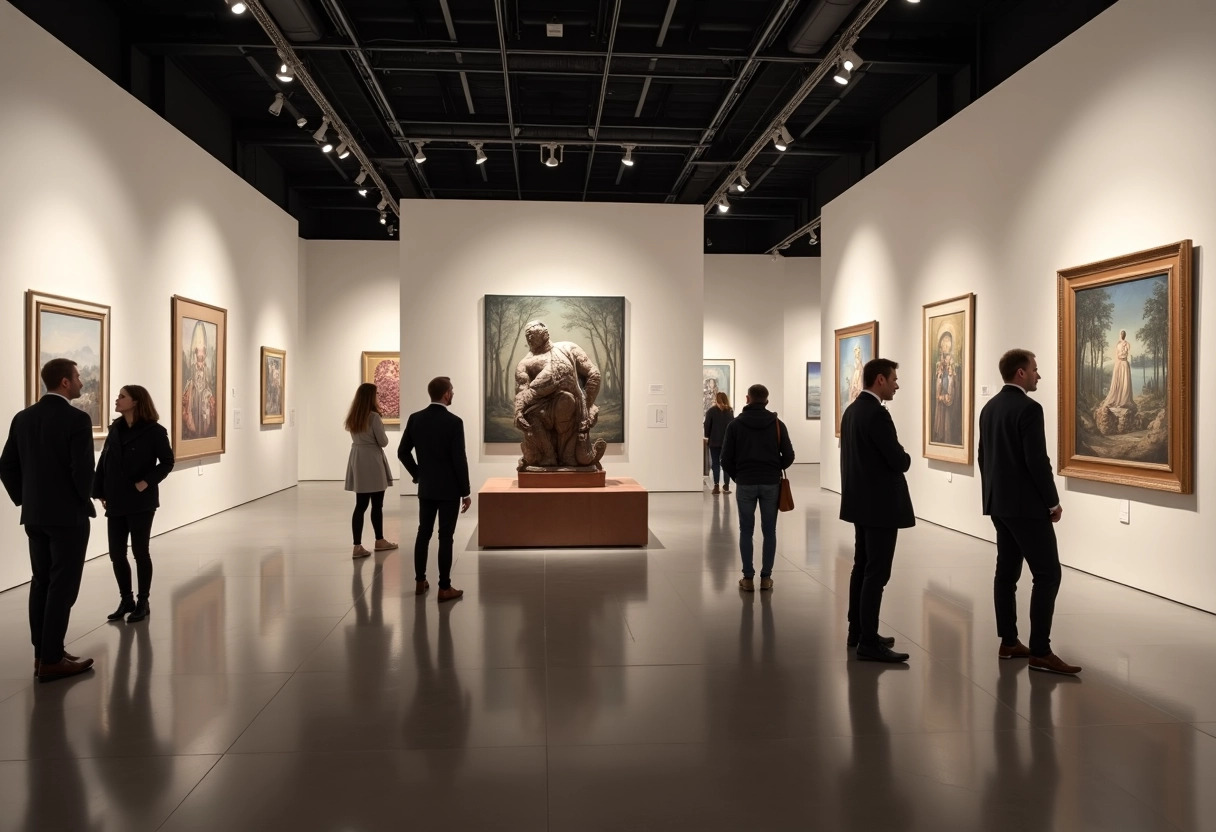
Their Influence on Trends and the Art Market
Contemporary artists are redefining the paradigms of the art market. Major events like Documenta, The Venice Biennale, The Whitney Biennial, and Frieze Art Fair are no longer just exhibition showcases but influential platforms that shape trends and the value of artworks. Jeff Koons and Damien Hirst dominate the market with works that transcend traditional boundaries of art.
Market and Trends
- The digitalization of art, particularly with NFTs, is changing the way artworks are bought and sold.
- Artist-run spaces like Wonder provide spaces for creation and exchange, away from conventional commercial circuits.
- Collaborative workshops such as Poush Manifesto, co-founded by Hervé Digne and Laure Confavreux-Colliex, promote a collective approach to artistic creation.
Piero Formica compares these contemporary workshops to the old Florentine studios led by Leonardo da Vinci and Sandro Botticelli. This comparison highlights the continuity and evolution of artistic practice through the centuries. Indeed, Andy Warhol‘s studio, the Factory, marked an era by bringing together diverse talents and creating a unique synergy.
Contemporary artists also influence artistic movements and the societal reflection they project. René Denizot wrote about the IFP, founded by Jean-François Brun, Dominique Pasqualini, and Philippe Thomas, as an example of this dynamic where art becomes a mirror of contemporary issues. The works of Jeff Koons and Andy Warhol continue to resonate in the world of contemporary art, illustrating the lasting impact of artists on aesthetic currents and the market.