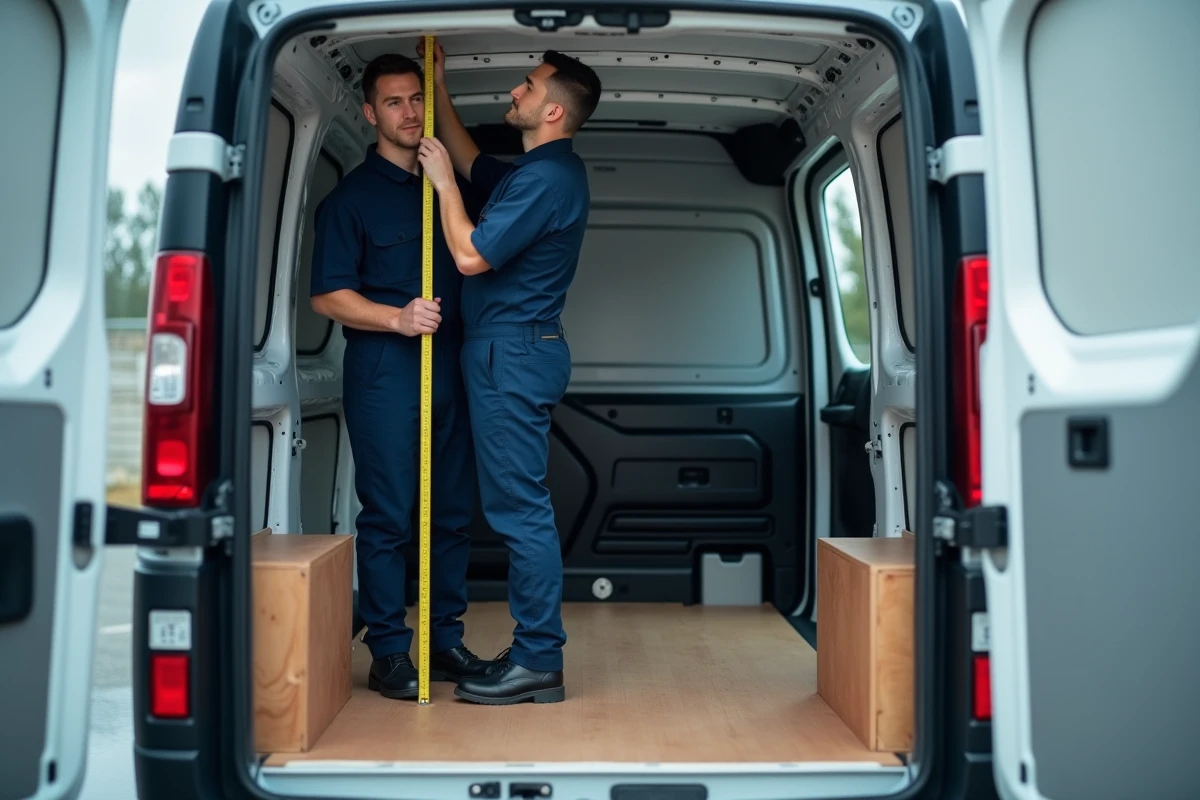
The Renault Trafic L2H1 has an external height of about 2.02 m when it leaves the factory. This figure, often the only one considered when choosing a utility vehicle, masks a reality that every converter must anticipate: the actual height of the vehicle once converted often exceeds this manufacturer specification, with direct consequences on access to underground parking and interior livability.
Actual height of the Trafic L2H1 after conversion: the trap of manufacturer specifications
The technical sheet provides a gross interior height that looks appealing on paper. In practice, each layer of conversion chips away at this measurement. Thermal insulation (cork, Armaflex, wood wool), plywood or paneling cladding, and then flooring: we regularly observe a loss of usable height of several centimeters at both the floor and the ceiling.
Add a roof vent and solar panels, and the actual external height often exceeds 2.05 to 2.10 m. This excess makes access to parking limited to 2.00 m impossible, a constraint that content focused on gross dimensions rarely mentions.
We recommend measuring the height clearance of the parking lots you frequent before finalizing the choice of a roof vent or solar kit. To check the dimensions of the Trafic L2H1 according to DreaMotors, the detailed measurements allow for planning each layer of conversion without unpleasant surprises.
L2H1 loading volume: what the announced 6.7 m³ doesn’t say
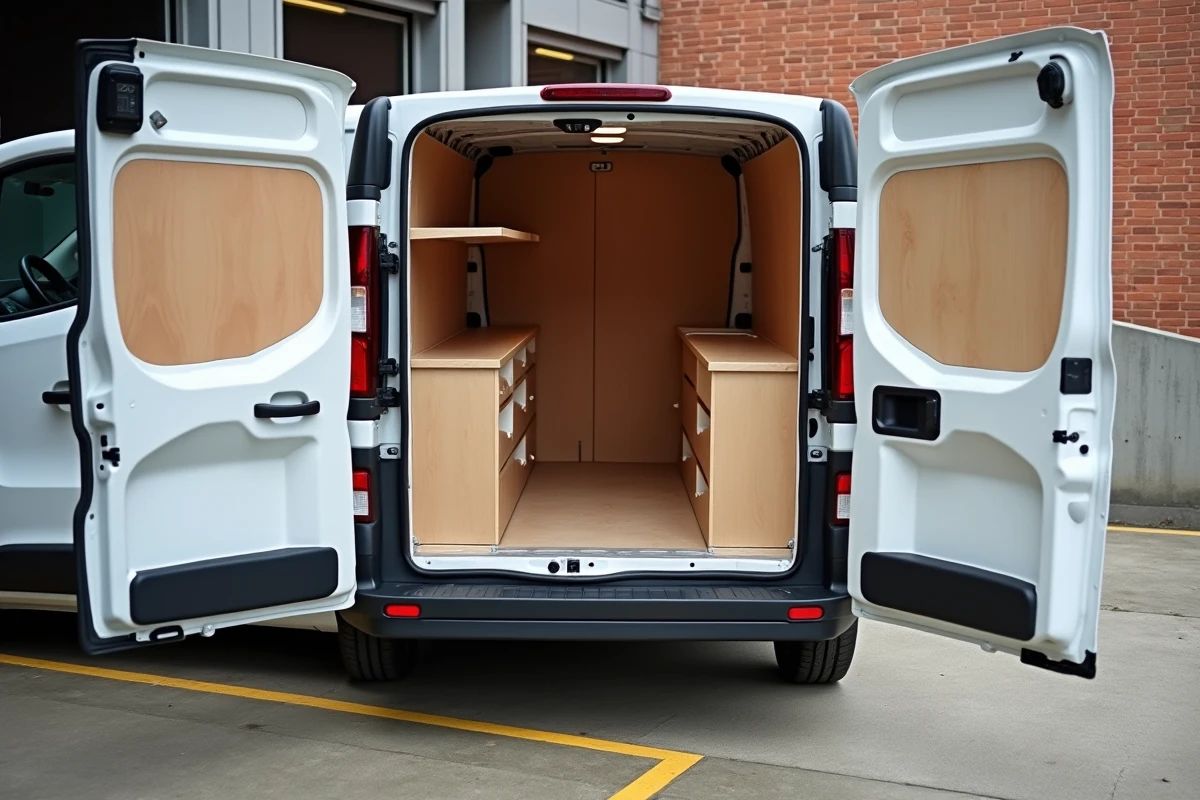
Renault announces a loading volume of up to 6.7 m³ for the L2 version. This figure corresponds to an empty space, measured up to the bare metal walls. As soon as you install a conversion (furniture, fixed bed, kitchen unit, water tank), the usable volume drops significantly.
Usable length and wheel arches
The loading length of the L2H1 significantly exceeds that of the L1, allowing for a fixed bed across for two people without encroaching on the kitchen space. The rear wheel arches are the main constraint: they reduce the usable width at the floor by about fifteen centimeters on each side in the rear area.
Any low furniture conversion must integrate these wheel arches into its plan. Craftsmen who work with a 2D template without measuring the actual dimensions of the vehicle often end up with cabinets that do not fit together, a common issue with used Trafic vehicles where tolerances vary slightly from one model year to another.
Width between wheel arches and ergonomics
The width between the wheel arches determines the choice of furniture. On an L2H1, this measurement allows for the installation of a standard slatted bed base in a transverse position, provided you work with reduced margins. We recommend measuring this width to the millimeter on your specific vehicle rather than relying on catalog data.
Payload of the Trafic L2H1: diesel versus E-Tech
The Trafic E-Tech L2H1 maintains a payload of over 1.2 tons despite the weight of the batteries, with a GVW of about 3.07 tons. This figure, rarely highlighted, changes the game for converters who are hesitating between thermal and electric powertrains.
A complete conversion (insulation, furniture, onboard electricity, tank) typically weighs several hundred kilos. On a diesel version, the payload margin is generally comfortable. On the electric version, the calculation becomes tighter but remains viable for a leisure van conversion, provided you weigh each element and prioritize lightweight materials.
- Insulation: sprayed cork or Armaflex weighs significantly less than wood wool for a comparable thickness
- Furniture: poplar or paulownia effectively replace birch plywood, which is heavier by several kilos per panel
- Water tank: a flexible jerrycan of low capacity limits the weight carried compared to a fixed rigid tank
Plan the conversion of the Trafic L2H1 without wasting space
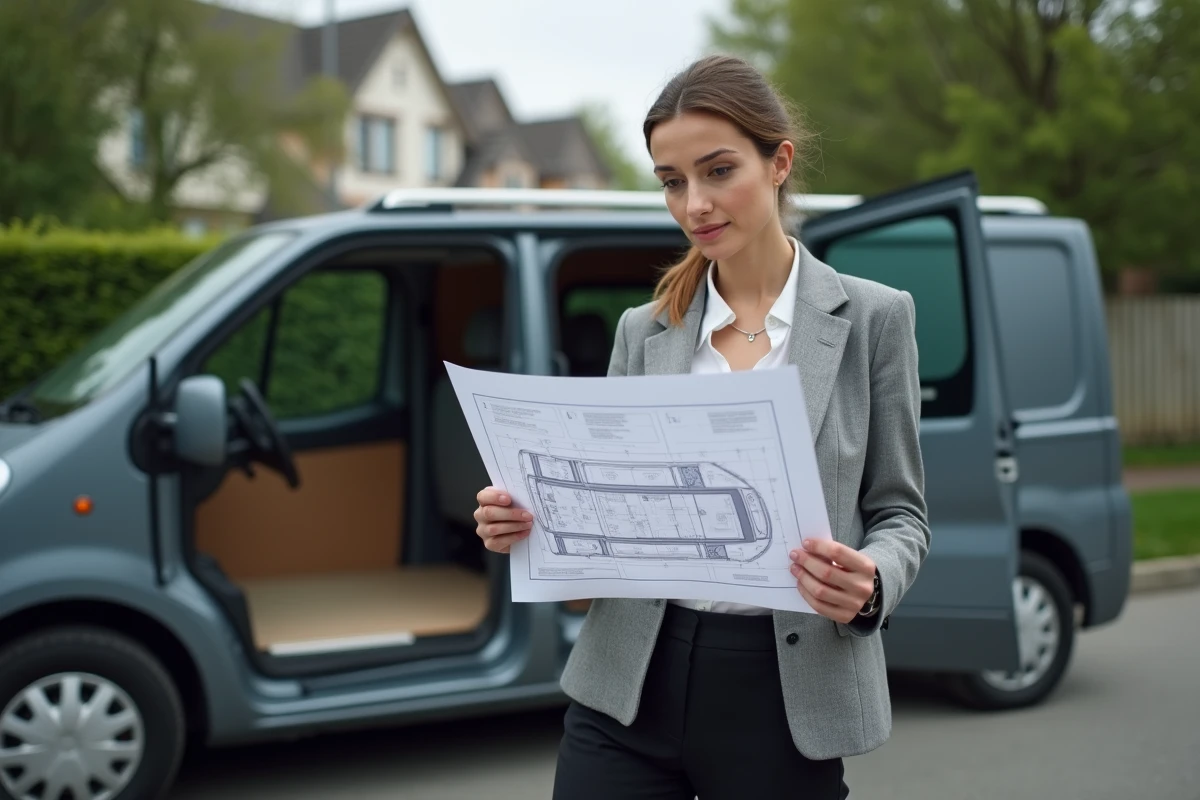
The L2H1 differs from the L2H2 by a low profile that makes it more discreet and stable on the road, at the cost of limited interior height. Any error of a few centimeters in the vertical plan impacts daily comfort.
Weight distribution and road behavior
Concentrating the weight of the conversion on the rear axle degrades the vehicle’s behavior, especially in the panel van version without suspension reinforcement. On an L2H1, the loading length allows for a more even distribution of furniture between the two axles than on an L1.
We recommend placing heavy items (auxiliary battery, full tank, kitchen unit with gas bottle) as low as possible and as close to the vehicle’s center of gravity as possible.
Original fixing points and anchors
The Trafic L2H1 has anchoring rails on the floor and fixing points on the walls that vary by version (panel van, combi, extended cab). Before drilling any metal, check the exact position of these factory anchors: they support loads well above a fixative attached to bare metal.
- The floor rails accept sliding locking systems compatible with most modular conversion kits
- The wall fixing points allow for securing shelves or a tall unit without additional drilling
- On combi versions, the bench rails serve as a base for a raised technical floor
The Trafic L2H1 remains one of the most converted utility vehicles in France, and for good reason: its size fits everywhere, its payload can accommodate a complete conversion, and its length allows for a true living space. The key to a successful conversion lies in accurately measuring the actual dimensions of your vehicle, not in catalog data. Each Trafic ages differently, and a few millimeters of difference are enough to compromise a custom piece of furniture.